Some stone installations are beautiful because of the material itself.
Others become memorable because of how the material has been used.
Bookmatching is one of the most striking techniques in natural stone design, transforming individual slabs into large-scale features that showcase the movement, veining and artistry found within the material.
Often seen in luxury residential projects, hospitality venues and commercial spaces, bookmatching creates a visual impact that is difficult to achieve through any other surface application.
But what exactly is bookmatching, and why has it become such a sought-after design feature?
What Is Bookmatching?
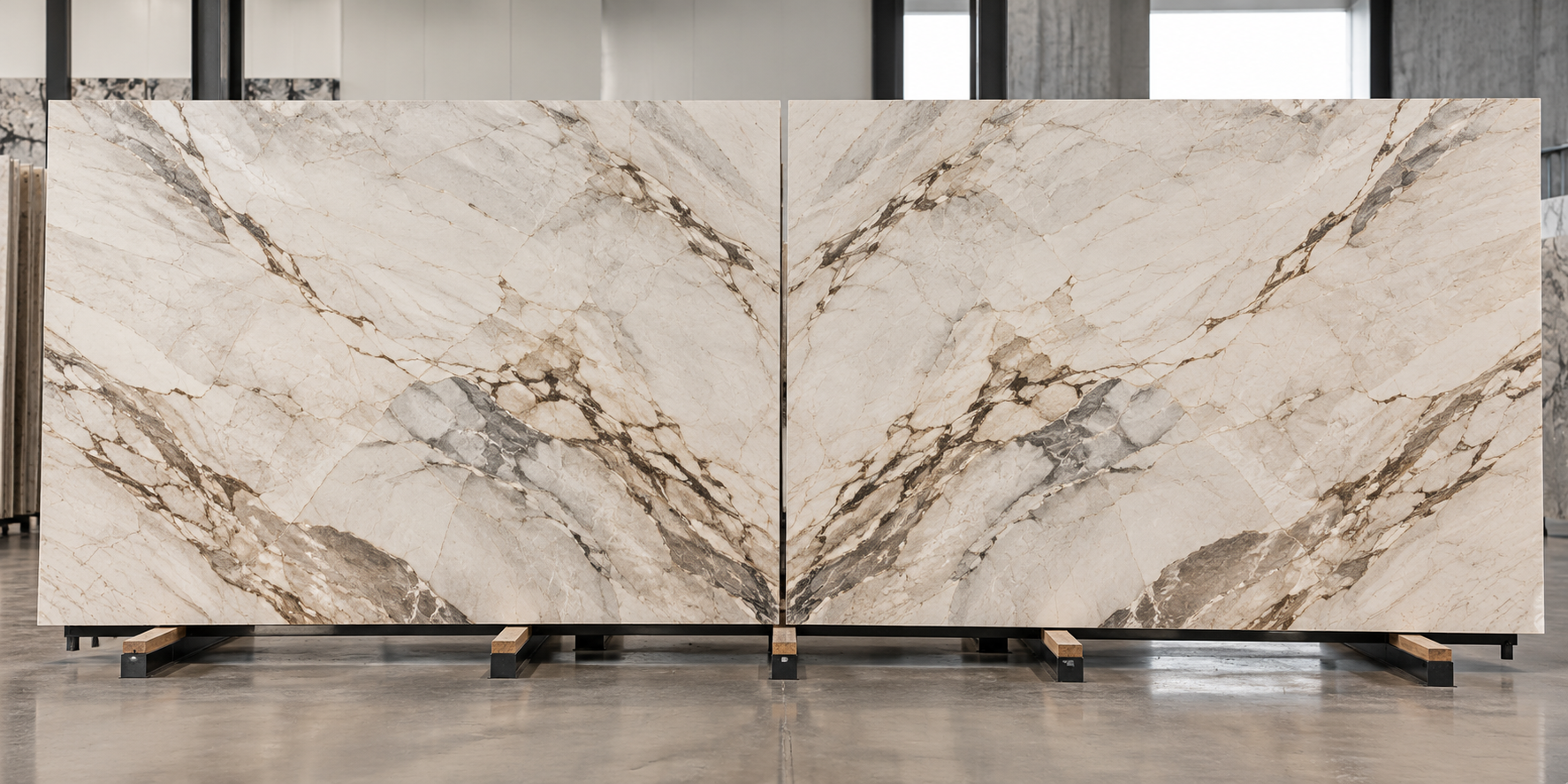
Bookmatching is a technique where two adjacent slabs are opened and positioned side by side, much like the pages of an open book.
Because the slabs originate from consecutive cuts within the same block of stone, the veining and movement naturally mirror one another. When aligned correctly, the pattern flows across the join, creating a symmetrical and highly visual effect.
The result can appear almost like a piece of artwork, with the natural movement of the stone becoming the focal point of the space.
No two bookmatched installations are ever the same, as every natural stone block contains its own unique patterning and characteristics.
Why Does It Create Such Impact?
Bookmatching draws attention because it introduces both scale and symmetry.
Natural stone is already valued for its movement and individuality, however bookmatching amplifies those qualities by creating a deliberate and often dramatic composition.
Rather than viewing the stone as a surface, it begins to feel like a feature.
Large sweeping veins become continuous patterns. Mineral formations become focal points. The natural characteristics of the material are elevated from background detail to architectural statement.
The effect can be subtle and elegant or bold and dramatic depending on the stone selected.
Either way, it creates a level of visual interest that immediately captures attention.
Which Stones Work Best?
Not every stone is suited to bookmatching.
Materials with strong movement, distinct veining and dramatic patterning typically create the most striking results.
Marbles, quartzites and some dolomites are among the most popular choices due to their natural variation and visual depth.
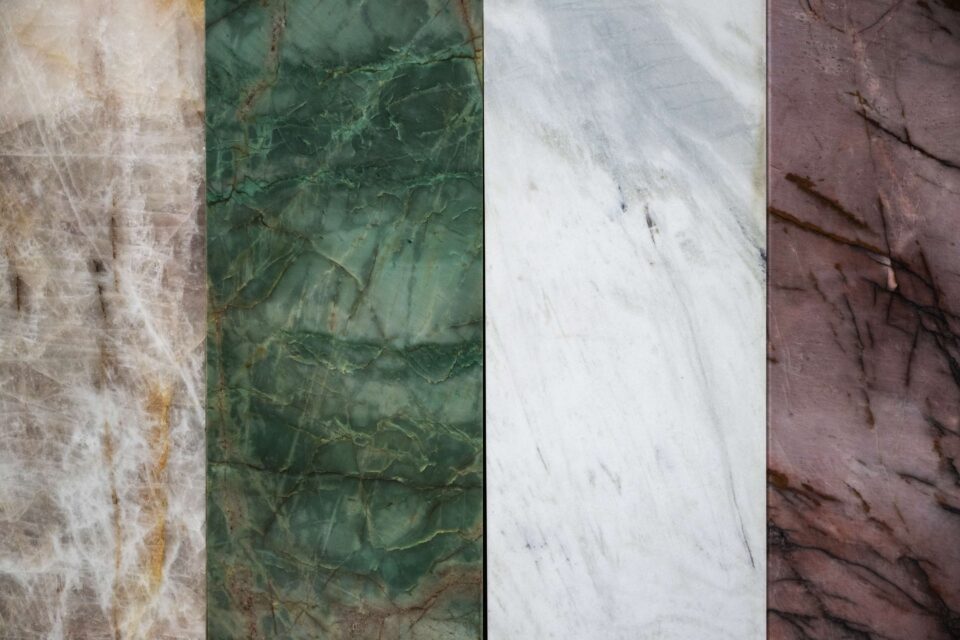
Materials such as Calacatta Verde Marble, Calacatta Viola Marble, Patagonia Quartzite, Arabescato Marble and Cosmopolitan Quartzite often produce spectacular bookmatched installations, allowing the movement within the stone to become a feature in its own right.
More subtle stones can also be bookmatched, however the effect is generally softer and more understated.
Where Is Bookmatching Used?
While bookmatching can be incorporated into many different applications, it is most commonly used where the stone can be viewed as a large uninterrupted surface.
Feature walls are among the most popular applications, allowing the full scale of the pattern to be appreciated.
Fireplaces also lend themselves particularly well to bookmatching, turning what is often a functional element into the focal point of a room.
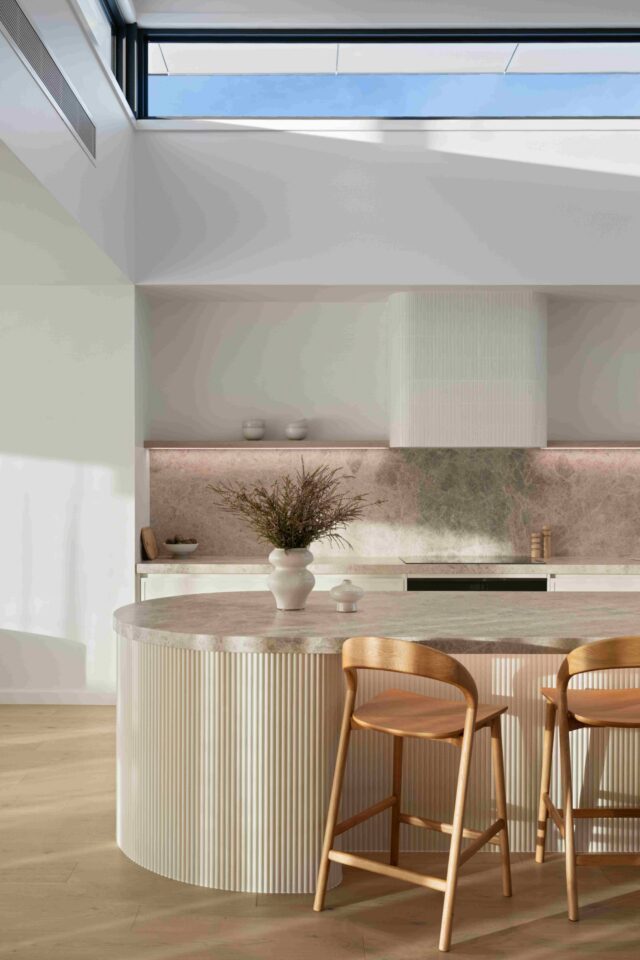
In kitchens, bookmatching is frequently used across splashbacks, island ends and feature panels. Bathroom walls, commercial reception areas and hospitality projects are also common applications.
Wherever it is used, the goal remains the same — allowing the natural beauty of the stone to become part of the overall architectural experience.
Planning Is Everything
Achieving a successful bookmatched installation begins long before fabrication.
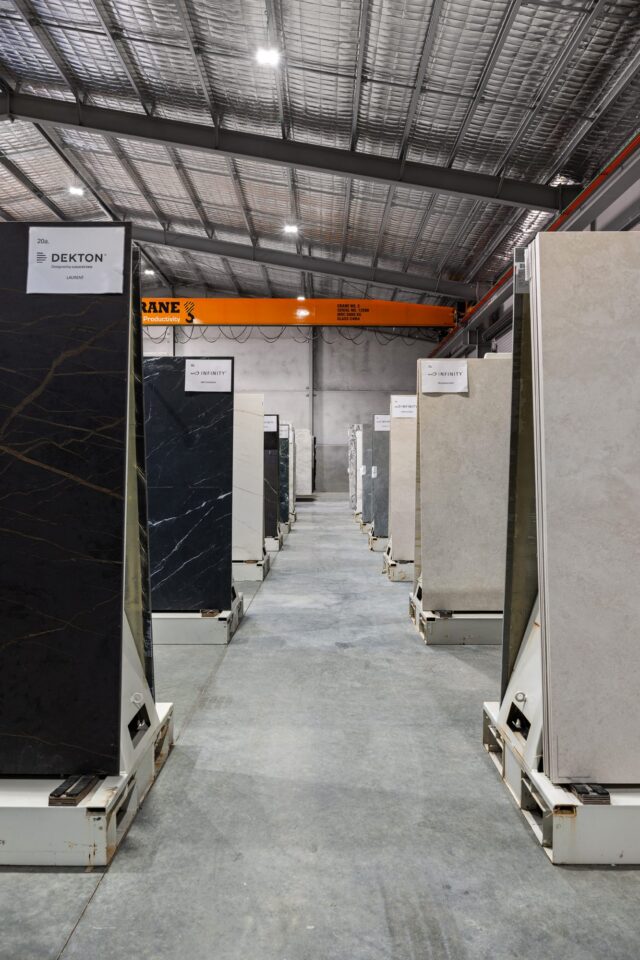
Careful slab selection is essential, as not every pair of slabs will produce the same visual outcome. The direction of the veins, the strength of the movement and the scale of the pattern all need to be considered.
Once the slabs have been selected, detailed planning and digital layout become critical.
At AMU Stone, slab scanning technology allows us to visualise how adjoining slabs will interact before fabrication begins. This process helps identify the strongest layout opportunities and ensures the final installation reflects the intended design outcome.
Bookmatching is one of the clearest examples of why slab layout matters.
The material may be exceptional, but without careful planning, its full potential can be lost.
The Role of Fabrication
Precision is critical when working with bookmatched stone.
Even minor variations in alignment can disrupt the continuity of the pattern and diminish the overall effect.
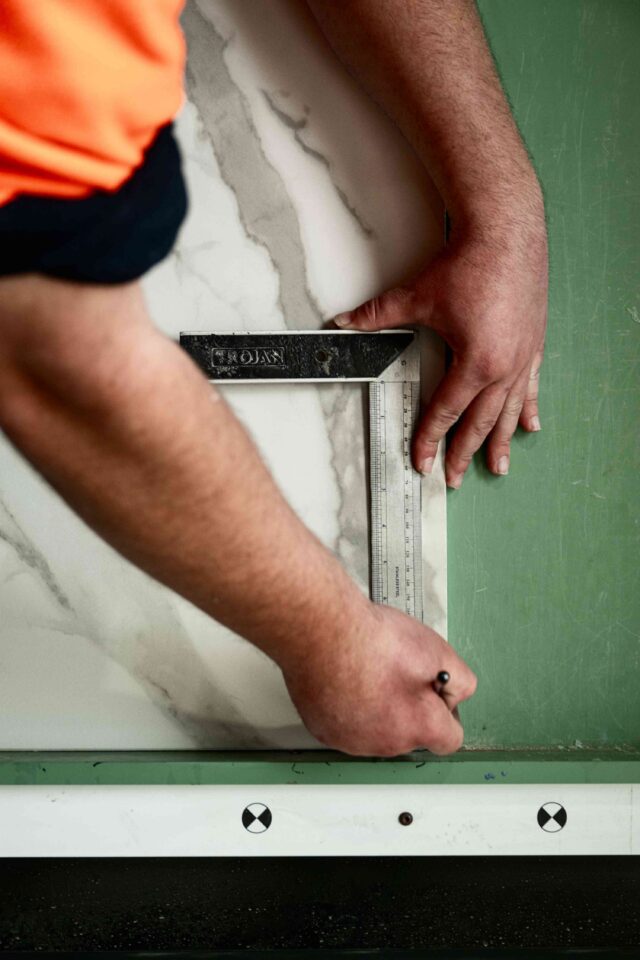
Accurate digital templating, detailed fabrication and careful installation all play a role in ensuring the veins align correctly and the transition between slabs appears intentional and seamless.
The most successful bookmatched installations are often the result of collaboration between designers, clients, fabricators and installers working towards a shared vision.
A Successful Bookmatch
A successful bookmatch begins long before fabrication.
From slab selection and digital slab scanning through to layout planning, fabrication and installation, every stage plays a role in achieving the final result. Careful planning ensures the natural movement within the stone is positioned to maximise visual impact and create the symmetry that makes bookmatching so distinctive.
At AMU Stone, we work closely with homeowners, architects, designers and builders to identify opportunities for bookmatching and develop layouts that showcase the natural beauty of each slab.
When executed correctly, bookmatching transforms natural stone into a defining architectural feature — creating spaces that feel unique, considered and impossible to replicate.
Natural Stone Advice & Inspiration
Choose The Right Stone With Confidence
Explore expert advice, material guides & design inspiration to better understand natural stone, compare your options & make a more informed choice for your space.