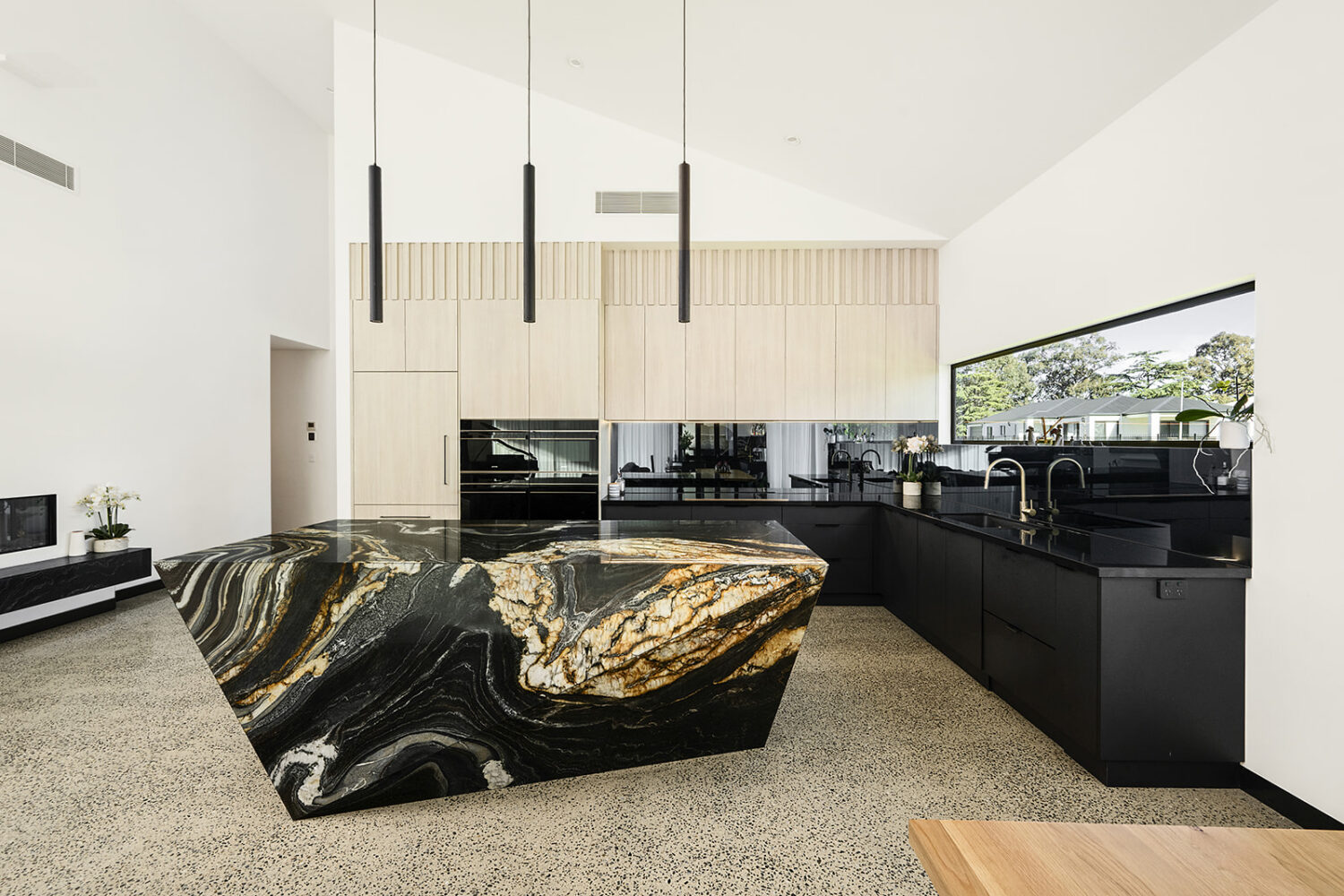
For more than a decade, white kitchens have dominated Australian homes.
Clean, timeless and versatile, they became the default choice for homeowners seeking a safe and enduring design solution. White cabinetry, white benchtops and neutral palettes offered simplicity and broad appeal, making them a popular choice across both new builds and renovations.
While white kitchens remain a classic option, we are seeing a noticeable shift in the way clients are approaching kitchen design.
The desire for individuality, warmth and materiality is creating opportunities for richer palettes, stronger contrasts and more expressive surface selections.
The kitchen is no longer being treated as a purely functional space. Increasingly, it is becoming the centrepiece of the home.
The Rise of Warmth
One of the most significant changes in recent years has been the move away from cooler colour palettes.
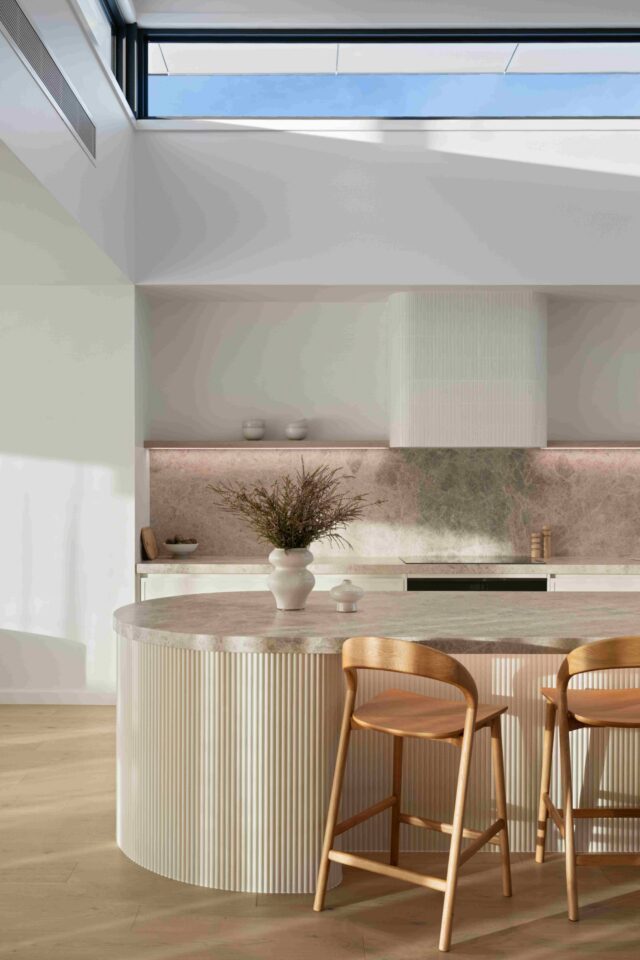
Where crisp whites and cool greys once dominated, warmer tones are becoming increasingly popular. Soft browns, natural timbers, warm whites, bronze accents and earthy materials are helping create spaces that feel more inviting and connected.
This shift is not about making kitchens darker. It is about introducing depth and character through carefully considered material selections.
Natural stone, textured surfaces and warmer finishes all contribute to creating spaces that feel more comfortable and lived in.
Natural Materials Are Taking Centre Stage
As design becomes increasingly focused on authenticity, natural materials continue to grow in popularity.
Clients are seeking surfaces with movement, texture and individuality rather than highly uniform finishes. Natural stone, in particular, is becoming a key feature within kitchen design as homeowners embrace the unique characteristics that each slab offers.
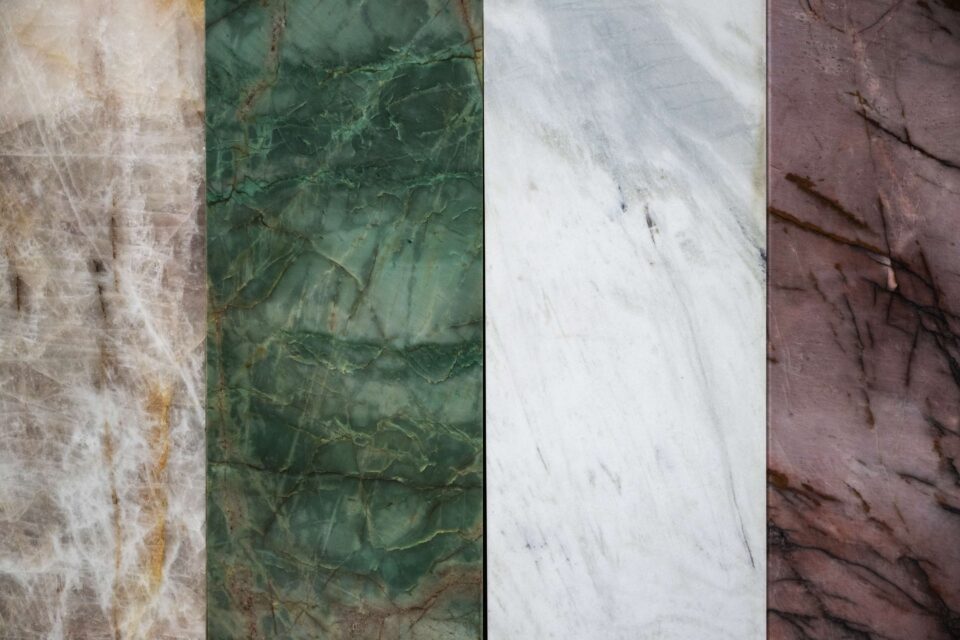
Materials such as quartzite, marble and dolomite are being selected not simply as benchtops, but as focal points that influence the entire material palette of the space.
More Movement, More Personality
For many years, kitchen design was characterised by subtle and understated surfaces.
Today, there is growing confidence in selecting materials with stronger veining, richer colour variation and greater visual impact.
Statement stones are increasingly being used to create moments within a space, whether through oversized islands, full-height splashbacks or integrated stone features.
Materials such as Taj Mahal Quartzite, Calacatta Verde Marble and Austral Dream Dolomite continue to gain popularity as clients look for surfaces that introduce personality without compromising sophistication.
The focus is shifting from creating a neutral backdrop to creating a memorable space.
Texture Is Becoming As Important As Colour
Colour may attract attention first, but texture is increasingly shaping how a space feels.
Leathered natural stone, brushed finishes and textured surfaces are introducing another layer of depth within kitchens. These finishes soften the overall appearance of a space while highlighting the natural qualities of the material itself.
The growing popularity of texture reflects a broader design movement towards interiors that feel more tactile, layered and authentic.
Rather than relying solely on colour contrast, designers are using texture to create interest and warmth.
The Kitchen As A Living Space
The way we use kitchens has changed significantly.
No longer confined to cooking alone, kitchens now function as places to gather, entertain, work, connect and spend time with family. As their role within the home has evolved, so too has the approach to their design.
This has influenced the materials being specified.
Rather than selecting surfaces that simply blend into the background, homeowners are increasingly choosing materials that contribute to the atmosphere of the space. Stone is being used to create furniture-like islands, integrated shelving, statement splashbacks and architectural features that extend beyond traditional applications.
The kitchen is becoming less utilitarian and more considered.
Timeless Doesn’t Mean White
One of the biggest misconceptions in design is that timelessness is achieved by avoiding colour or character.
In reality, timeless interiors are often the result of thoughtful material selection, balanced proportions and authentic finishes.
A kitchen does not need to be entirely white to feel enduring.
Natural stone, warm timber, textured surfaces and carefully selected colours can all contribute to a kitchen that feels sophisticated today while remaining relevant for years to come.
The most successful kitchens are rarely defined by a single trend. They are defined by materials that feel genuine and considered.
Looking Forward
White kitchens are not disappearing.
What is changing is the willingness of homeowners, designers and builders to explore alternatives.
There is growing confidence in embracing warmth, texture, movement and natural materials. Clients are seeking kitchens that feel personal, connected to their lifestyle and reflective of the way they live.
At AMU Stone, we continue to see this shift through the materials being selected, the projects being designed and the conversations taking place within our showrooms.
The future of kitchen design is not about abandoning white.
It’s about looking beyond it.
Natural Stone Advice & Inspiration
Choose The Right Stone With Confidence
Explore expert advice, material guides & design inspiration to better understand natural stone, compare your options & make a more informed choice for your space.